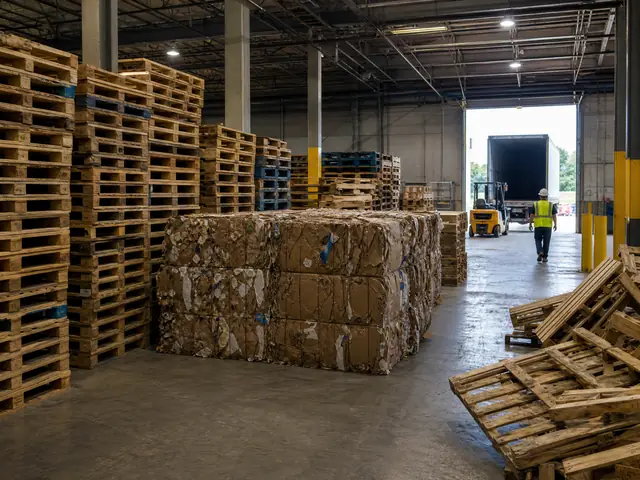
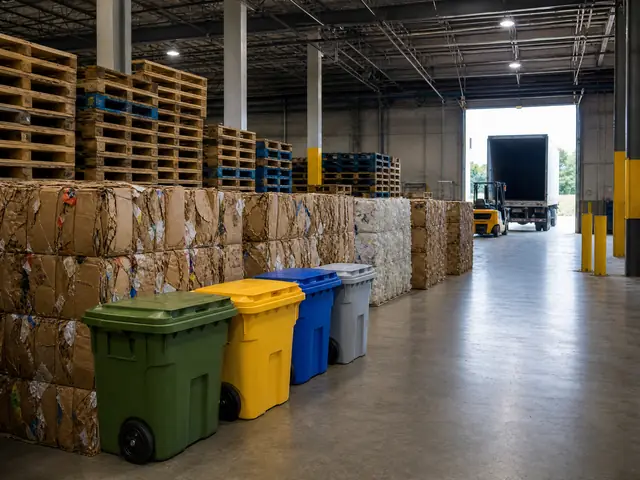
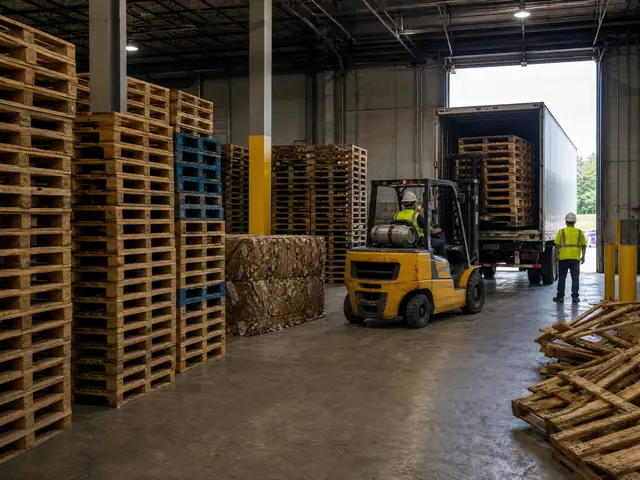
A practical program starts with the operating details.
Warehouse recycling is more useful when the plan fits the way material moves through your building. We help warehouses, distribution centers, and manufacturers organize a practical path for excess wood or plastic pallets, corrugated cardboard, and select reusable packaging. Start with what is accumulating, where it is staged, and how it can be loaded. One-time cleanouts and recurring pickup programs are evaluated by material, condition, quantity, site access, location, schedule, and current availability. This service addresses non-hazardous commercial streams only.
- Clearer receiving and staging space
- Pallet and cardboard stream separation
- One-time cleanout evaluation
- Recurring pickup planning
- Dock-access review before routing
- One contact for recovery coordination
Build the Program From the Dock Back
Most recycling problems begin as space and handling problems: mixed material blocks a receiving lane, empty pallets linger by the dock, or cardboard takes up staging space. Begin with a walk-through of the material stream: what arrives, what is reusable, what is recoverable, and where crews can keep it separated. That operating picture helps determine whether a one-time cleanout or recurring pickup conversation fits without disrupting active dock work. It also gives supervisors a usable staging plan before a truck is requested.
Give Pickup Planning the Right Details
Give pickup planning the same attention as an inbound appointment. Share pallet types and condition, cardboard format such as baled or loose, estimated quantity, accumulation pace, trailer or forklift access, dock constraints, and preferred collection window. Clear details let Pallet Connections & More evaluate acceptance and routing instead of treating every load as interchangeable. Availability depends on the material, site, location, volume, schedule, and current conditions.
Keep Each Recovery Stream Distinct
Warehouse teams often handle more than one stream at once. Used wood and plastic pallets may need sorting; clean corrugated boxes can be staged separately; reusable packaging may have its own recovery path. Keeping materials out of trash and away from incompatible items supports cleaner loading and a better review of available options. The result is a defined next step for each non-hazardous stream, not a broad promise that every item will be accepted.
Common Applications
- Excess wood pallet accumulation
- Used plastic pallet staging
- Loose corrugated cardboard
- Baled cardboard recovery
- Reusable packaging collection
- Non-hazardous warehouse cleanouts